The Four Counter-Tenors
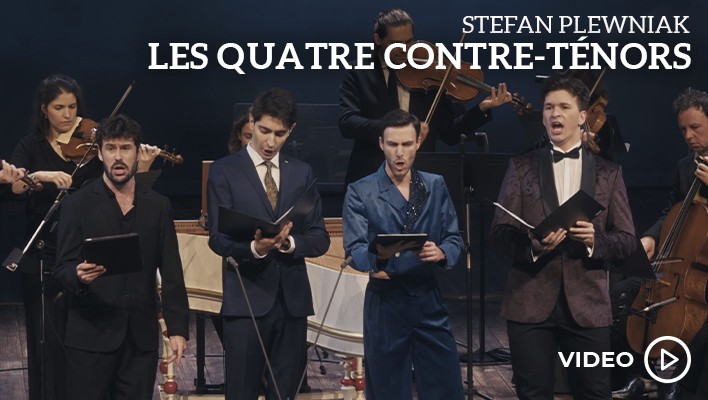

The Four Counter-Tenors
Nicolò Balducci, Paul-Antoine Bénos-Djian et Rémy Brès-Feuillet Countertenors
Invité : Vojtěch Pelka Countertenors
Winner of the 2025 Renata Tebaldi International Singing Competition
Orchestre de l’Opéra Royal
Stefan Plewniak, Conductor
In Baroque Europe, castrati held an extraordinary place: they were the first stars in the history of music. Almost all were Italian and trained in the conservatoires of Naples, dedicating themselves to careers in opera or serving in the most prestigious princely chapels, including the Vatican and the Royal Chapel of Versailles – often combining both.
In many productions of operas and sacred oratorios, from Vienna to London, castrati systematically took the title role (in Rome, all the female roles) and several important roles, creating a real competition on the stage. It became a contest of virtuosity and emotion between singers, with the audience acting as referee, as much through their requests for encore performances as through the sumptuous gifts lavished on the most adored. The opera was regularly supplemented by the "suitcase" arias that the most sought-after castrati brought with them to shine.
With a trio as extraordinary as that formed by Nicolò Balducci, Paul-Antoine Bénos-Djian and Rémy Brès-Feuillet, the audience is in for a top-class competition: baroque to the highest degree, the emulation between these primi uomi was the attraction of Italian operas. The most thrilling of these vocal dynamics is brought to life by the voices of three countertenors in an evening of castrato glory.
The Royal Opera Productions.
The concert is filmed by Futur Antérieur Production.

- Genre Concert
- Period 17th and 18th centuries
- Collection Château de Versailles Spectacles
- pieces The Four Counter-Tenors
- Composer Porpora - Haendel - Giacomelli - Vivaldi - Corelli
- Musical Ensemble Orchestre de l'Opéra Royal
- Conductor Stefan Plewniak
- Soloists Nicolò Balducci - Paul-Antoine Bénos-Djian - Rémy Brès-Feuillet - Vojtěch Pelka
- Duration 1'13'39
The Four Counter-Tenors
Nicolò Balducci, Paul-Antoine Bénos-Djian et Rémy Brès-Feuillet Countertenors
Invité : Vojtěch Pelka Countertenors
Winner of the 2025 Renata Tebaldi International Singing Competition
Orchestre de l’Opéra Royal
Stefan Plewniak, Conductor
In Baroque Europe, castrati held an extraordinary place: they were the first stars in the history of music. Almost all were Italian and trained in the conservatoires of Naples, dedicating themselves to careers in opera or serving in the most prestigious princely chapels, including the Vatican and the Royal Chapel of Versailles – often combining both.
In many productions of operas and sacred oratorios, from Vienna to London, castrati systematically took the title role (in Rome, all the female roles) and several important roles, creating a real competition on the stage. It became a contest of virtuosity and emotion between singers, with the audience acting as referee, as much through their requests for encore performances as through the sumptuous gifts lavished on the most adored. The opera was regularly supplemented by the "suitcase" arias that the most sought-after castrati brought with them to shine.
With a trio as extraordinary as that formed by Nicolò Balducci, Paul-Antoine Bénos-Djian and Rémy Brès-Feuillet, the audience is in for a top-class competition: baroque to the highest degree, the emulation between these primi uomi was the attraction of Italian operas. The most thrilling of these vocal dynamics is brought to life by the voices of three countertenors in an evening of castrato glory.
The Royal Opera Productions.
The concert is filmed by Futur Antérieur Production.
- Genre Concert
- Period 17th and 18th centuries
- Collection Château de Versailles Spectacles
- pieces The Four Counter-Tenors
- Composer Porpora - Haendel - Giacomelli - Vivaldi - Corelli
- Musical Ensemble Orchestre de l'Opéra Royal
- Conductor Stefan Plewniak
- Soloists Nicolò Balducci - Paul-Antoine Bénos-Djian - Rémy Brès-Feuillet - Vojtěch Pelka
- Duration 1'13'39